
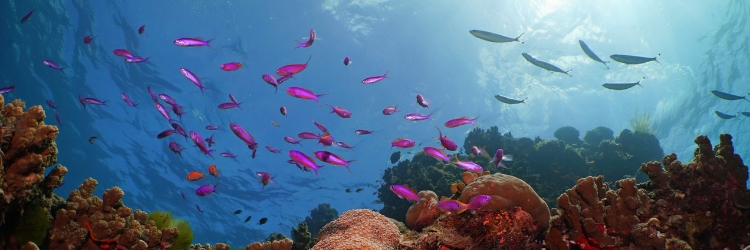
For most people, the fish are the reef. Slip into the water on a Great Barrier Reef day trip from Port Douglas and you are surrounded by colour — anemonefish darting into their host anemone, parrotfish crunching at the coral, a curious wrasse the size of a small child drifting over to inspect you. The Great Barrier Reef is home to around 1,625 species of fish, one of the richest fish communities on Earth.
This guide introduces the reef fish a Port Douglas visitor is most likely to meet, how to recognise them, and the surprising jobs they do to keep the reef alive. Sightings are never guaranteed — the reef is wild — but knowing what you’re looking at turns a wall of colour into a cast of characters.
Scientific classification
Reef fish are ray-finned fishes (Class Actinopterygii; WoRMS places them in Class Teleostei). Below are the featured species and groups, with families and IUCN Red List status where a species has been assessed. Taxonomy and AphiaIDs are from the World Register of Marine Species (WoRMS).
| Common name | Scientific name | Family | IUCN status |
|---|---|---|---|
| Barrier Reef anemonefish (the local “clownfish”) | Amphiprion akindynos | Pomacentridae | Least Concern |
| Humphead / Māori wrasse | Cheilinus undulatus | Labridae | Endangered |
| Common coral trout | Plectropomus leopardus | Epinephelidae | Least Concern |
| Parrotfishes (group) | Family Scaridae* | Scaridae | — |
| Butterflyfishes (group) | Family Chaetodontidae | Chaetodontidae | — |
| Damselfishes & anemonefishes (group) | Family Pomacentridae | Pomacentridae | — |
| Surgeonfishes (group) | Family Acanthuridae | Acanthuridae | — |
Higher classification: Kingdom Animalia > Phylum Chordata > Class Actinopterygii (ray-finned fishes).
*Parrotfishes are traditionally placed in the family Scaridae; under current WoRMS taxonomy they are treated within the wrasse family Labridae.
Is the “Nemo” clownfish on the reef?
Almost everyone asks. The honest answer: the anemonefish you’ll see off Port Douglas is the Barrier Reef anemonefish (Amphiprion akindynos) — a close local cousin of the film’s clownfish, not the same species. The movie’s fish is the western clown anemonefish (Amphiprion ocellaris), which doesn’t live on the Great Barrier Reef at all. Our local anemonefish is orange-brown with two white, black-edged bands, and it lives among the stinging tentacles of a host sea anemone — a partnership so central to its life that its scientific name, akindynos, comes from the Greek for “safe” or “without danger.”
Reef fish you may see
- Anemonefish (Barrier Reef anemonefish): small, bold, always near its host anemone. A visitor favourite.
- Parrotfishes: named for their beak-like fused teeth; you can often hear them scraping algae and coral. They are the reef’s sand-makers (see below).
- Butterflyfishes: small, disc-shaped and vividly patterned, often with an eye-mask stripe; many feed on coral polyps and are used by scientists as indicators of reef health.
- Surgeonfishes: named for a scalpel-like spine at the base of the tail; mostly algae grazers that help keep coral clear.
- Coral trout: a reddish grouper flecked with blue spots — a predator, and the reef’s best-known commercial fish.
- Humphead / Māori wrasse: one of the largest reef fishes, with maze-like facial markings and a bulging forehead. Curious and often approachable — but Endangered and naturally rare, so look, don’t chase.
The jobs reef fish do
Reef fish aren’t just decoration — they build and maintain the reef:
- Parrotfish make the sand. As they graze, parrotfish grind up coral and algae and excrete fine carbonate sediment — a major source of the white sand on reef cays and beaches. (The precise amount varies; scientists study parrotfish “bioerosion” as a key reef process.)
- Cleaner fish run cleaning stations. Small cleaner wrasse set up “stations” where larger fish queue to have parasites and dead skin removed — a genuine mutual-benefit partnership. Long-term reef studies have shown that when cleaners are removed, the number and variety of fish nearby falls.
- Grazers keep coral in the light. Surgeonfish and other grazers crop the algae that would otherwise smother young coral.
Where reef fish live around Port Douglas
Port Douglas day trips visit the outer Great Barrier Reef, including the Agincourt ribbon reefs, plus the inshore Low Isles. Damselfishes, anemonefishes, parrotfishes, butterflyfishes and surgeonfishes are all part of the shallow coral community across the Reef, so the outer reefs off Port Douglas sit well within their range. What we won’t do is promise a particular fish at a particular reef on a particular day — reef fish are wild and mobile, and honest expectation-setting is part of a good trip.
One clarification worth making: the famous, diver-friendly potato cod of the Great Barrier Reef are associated with Cod Hole, on Ribbon Reef No. 10 far to the north — a site reached on multi-day expedition trips, not a standard Port Douglas day tour. It’s a wonderful reef icon, just not part of a day trip from Port Douglas.
Conservation and responsible viewing
Most reef fish you’ll see are common, but not all: the humphead/Māori wrasse is Endangered on the IUCN Red List, heavily targeted elsewhere by the live-fish trade, and protected here. Coral trout, though listed as Least Concern, are a prized catch and managed carefully on the Reef.
The Reef Authority’s responsible-reef practices apply to every fish encounter:
- Don’t feed the fish. Feeding alters natural behaviour; it is discouraged under Reef Authority guidance.
- Don’t touch or chase fish or coral — observe from a distance and let animals approach you.
- Mind your fins and buoyancy so you don’t contact or break coral.
Reef fish and the Port Douglas reef experience
Fish live on and among the reef’s coral, alongside its reef sharks, sea turtles and giant clams. Our snorkelling overview explains how most visitors get among them, and the Opal Reef guide describes one of the outer reefs’ “coral, fish and open water” areas. To choose a trip, compare your options on Which Great Barrier Reef tour is right for you? or browse Great Barrier Reef tours from Port Douglas. Return any time to the Marine Life of the Great Barrier Reef hub.
Frequently asked questions
What fish live on the Great Barrier Reef?
Around 1,625 species of fish, according to the Reef Authority. Snorkellers most often see anemonefishes and damselfishes, wrasses, parrotfishes, butterflyfishes, surgeonfishes and coral trout.
Will I see clownfish / Nemo?
You may well see the Barrier Reef anemonefish (Amphiprion akindynos), a local cousin of the film’s clownfish, tucked into its host anemone. It isn’t the film’s exact species, which doesn’t occur on the Great Barrier Reef — and, as always, sightings aren’t guaranteed.
What is the big Māori / humphead wrasse?
Cheilinus undulatus — one of the largest reef fishes, with a humped forehead and maze-like face markings. It’s curious and often approaches divers, but it’s Endangered and naturally rare, so give it space.
How many fish species are on the Great Barrier Reef?
About 1,625 species of fish, according to the Reef Authority.
Which fish are easiest to spot snorkelling?
Damselfishes, anemonefishes, parrotfishes, butterflyfishes and surgeonfishes are common in shallow coral. Which ones you’ll see on the day varies — we never promise a specific fish.
Is it OK to feed the fish?
No. The Reef Authority’s responsible-reef practices discourage feeding because it changes natural behaviour.
Sources & credits
Taxonomy and AphiaIDs: World Register of Marine Species (WoRMS). Species identification, ranges and natural history: Australian Museum fish factsheets. Conservation status: IUCN Red List (humphead wrasse Cheilinus undulatus Endangered; coral trout Plectropomus leopardus Least Concern; anemonefish Least Concern). Reef species numbers, ecology and responsible-viewing guidance: Great Barrier Reef Marine Park Authority (Reef Authority). This page is educational and does not guarantee wildlife sightings.
Local reef knowledge & expert contribution
Are you a reef-fish ecologist, marine biologist or Master Reef Guide working the reefs off Port Douglas? We welcome expert review, identification help and imagery. Contributors add expertise and credibility and gain mutual visibility, but never buy rankings, placement or recommendations — our guidance always reflects what genuinely serves the visitor.